
The Fabric of our Society
The Fabric of Our Society column invites industry leaders to provide experience-based opinions and discussions on various topics. Diverse perspectives are respected and most welcome, but do not necessarily reflect the opinions of IESNYC or the Board of Managers. Want to contribute? Email [email protected]
June 2025
The Zelig of Architectural Lighting Design
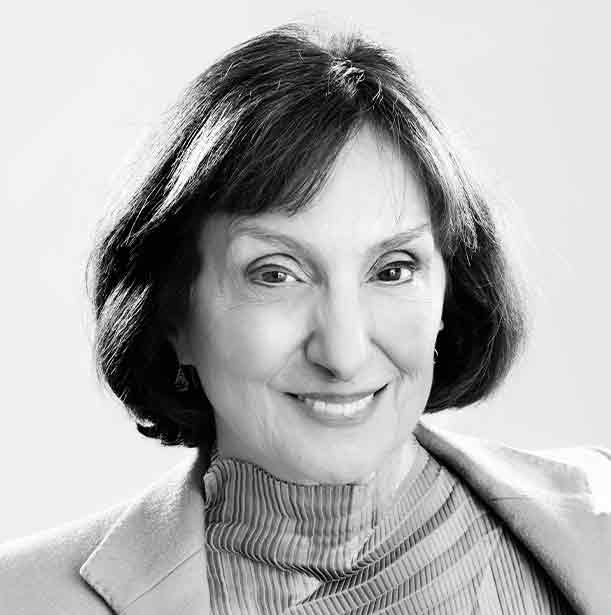
Francesca Bettridge
Principal at Cline Bettridge Bernstein Lighting Design
On March 17, 2025, Francesca Bettridge was honored with the Lifetime Achievement Award from EdisonReport, along with eight other recipients. The honorees were chosen for their dedication and impact that have shaped the lighting industry, leaving a lasting legacy.
IESNYC leadership was so impressed with Bettridge’s acceptance speech, that we are printing it here, in its entirety. Stephen Bernstein, also a principal at CBB, provided a kind introduction.
Thank you, Stephen, my partner and close friend, and thank you to the committee for inviting me here tonight and honoring a very long and fortunate career. In addition, I want to say how proud and grateful I am to all the staff and designers – past and present – who have contributed to the collaborative spirit of CBB with such good humor and grace.
Please allow me to also acknowledge my husband, Anthony Cohn, whom I met about 40 years ago when he was the project designer at Robert Stern’s office. Not only did we fall in love on a site visit, but for that project I was the recipient of my first Lumen Award with Carroll Cline. (Just to note that in those days the winners met in a small conference room and were handed our certificates without even sitting down. How times have changed!)
On occasion, I have said that I see myself as the Zelig of architectural lighting design. Not in the Woody Allen sense of being a spectator of different historical times, but in the Yiddish meaning of “blessed.” And I was a spectator, but also a lively and engaged participant.
I was attending (and was working at) the Open Atelier of Design, founded by the Italian architect and visionary, Beppe Zambonini, when after an end-of-term jury, Carroll Cline called and asked me to work for him. Carroll was one of the pioneers of lighting design; and another student – who was older, wiser, and an interior designer – encouraged me to take the opportunity because it was a new field and open to women. At that time, it was rare to see women working as architects.
Shortly afterwards, Jim Nuckolls asked Carroll to join him as another consultant at ICL, and I went with him. After that, I had greatness and opportunities thrust upon me. It is amazing to me that now most lighting designers do not even know of Carroll or Jim – but especially Carroll, who influenced me. And I know I would not have had my career without him.
Witnessing history
So back to the Zelig reference… Carroll insisted that I immediately join the IESNYC and the IALD, and this introduced me to the organizations and the profession that I was now part of. Bill Warren was a cheerful guide and encouraged me to be part of the first Richard Kelly Scholarship Committee. I was in the conference room with the originators of our profession – Howard Brandston, Jim, Carroll, Leslie Wheel, Jeffrey Milham, to name a few – as they discussed the opportunity and the decision to be part of Lighting World, which evolved into Lightfair.
The IALD and the IES went from all-volunteers to professional organizations serving the lighting community. Previously, the IALD annual meeting was in the living room of Leslie Wheel’s townhouse. (As a struggling single mother at the time, I was impressed with her indoor lap pool!)
Carroll loved new technology and encouraged me as well, and we always tried to incorporate new sources into our designs. We designed the first residence using MR16s, the biax lamps where we had to search for ballasts, and then… the game-changer.
I have seen the future…
Back in the 1990s, there was a presentation by a Hewlett Packard engineer at Cooper Union – and this was really the turning point for all my work since then. He described a lighting source that was tiny, powerful, and electronic – not a filament or the promise of MasterColor for HID. In a dark auditorium, with what looked like a flashlight, he beamed a red light across the whole room. Afterwards, I went back to the office and said, “I have seen the future of lighting, and it is called LED.”
Shortly after, we were designing Time Warner Center with Skidmore, Owings & Merrill. Elkus Manfredi, Rafael Viñoly, and I went to a client meeting – a large conference room of about 50 men and I was the only woman. I held a long LED strip and said, “Your building is for the 21st century and this is the light source of the future. We should use it.” And they said, “Okay.”
It was quite a learning curve in the years ahead, but we remained convinced of the future of the new technology and designed LEDs into all new projects going forward.
And the “blessed” part… This is an industry of good people, helpful and generous, and I have worked with really smart and creative people. César Pelli – always cheerful, wise, and encouraging – when I would present our ideas to him, he would sometimes say, “Thank you, Francesca. I would not have thought of this. Maybe not right for this project, but I appreciate that you showed it to me.”
With his office, I worked on some of my favorite projects – especially the performing arts centers: Overture, Hancher, Segerstrom, Eccles to name a few. And the joy and pride when we celebrated with César and his colleagues at the openings… beautiful projects for the public to enjoy.
The joy of public spaces
Another great designer and personality that I think of, and miss, is Hugh Hardy. He would always greet us with a “Happy Tuesday!” and was kind, funny, and unique. His design process was somewhat elliptical. I remember one time after many schemes (that finally landed back on the first one), I said, “Hugh, I think a Vulcan mind meld would help me at this point.” We both laughed.
The first big tower I worked on with César Pelli Architects, in 1985, was NationsBank in Charlotte, NC, now called the Bank of America. It was a very challenging and fabulous project, with a complicated and beautiful crown where we used large-scale models to work out the night imagery; a monumental Founders Hall, including light to keep trees alive; and a lobby with large frescoes and an illuminated art glass ceiling in the elevator lobby, all accessible from below.
Afterwards, the design principals, Turan Duda and Jeff Paine [now of Duda|Paine Architects] moved to Durham, NC, and have been just about my favorite architects, not including my husband. We were always on the team, and I maintain that, over the years, Turan became an exceptionally good lighting designer. He always insisted that a tower should not have a disembodied top, but the lighting should pull up and connect the base, body, and crown. Every project with them was a lighting challenge: from commercial towers, wellness centers, academic and research buildings, and tiny jewels like the Quiet Room in the Duke Cancer Center.
In NYC I can look at the skyline and appreciate that I have been the Principal on some important landmarks. For example, Time Warner Center, 7 World Trade Center, 731 Lex or the Bloomberg Tower, the Daryl Roth Theatre, 2 Penn Plaza [now Penn 2], 220 Central Park South, One Manhattan Square, 415 Central Park West, and the Bank of America Tower [1 Bryant Park] – the first LEED Platinum tower in the US. We also did Torre Iberdrola in Bilbao [Spain], with César Pelli architects, the first LEED Platinum tower in Europe – where incidentally we also had to light and keep alive 400-year-old olive trees.
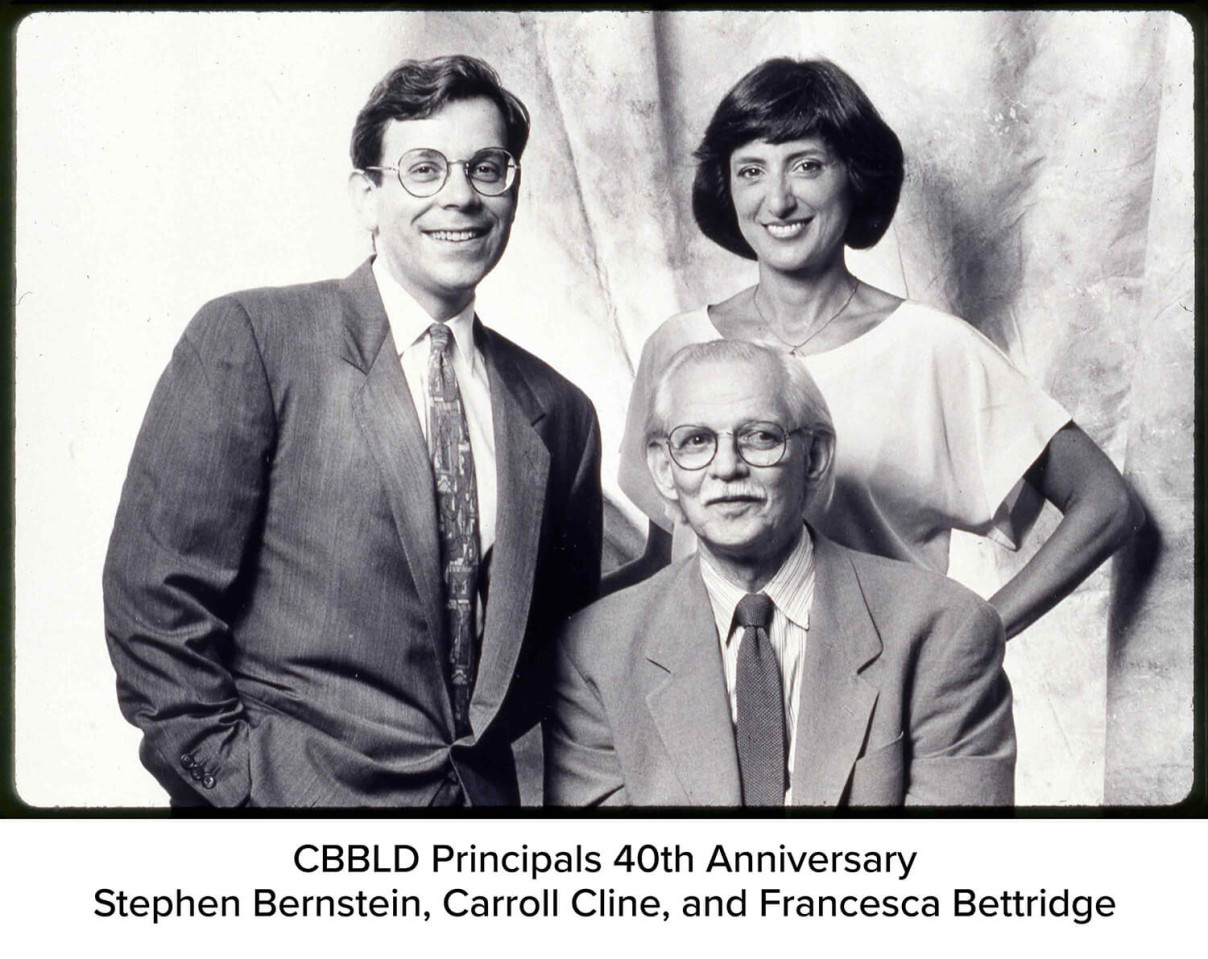 The CBB team
Starting with Carroll, and continuing with Stephen, Michael Hennes, and many talented designers at CBB, I, rather, we, have amassed a portfolio that has included every building type that I could have hoped for: aquariums, parks, museums, schools, historic restorations at the Yale University Sterling Library, mansions of excessive size, museum-quality art collections, labs, science centers, public libraries, a Planned Parenthood center, and even a butterfly habitat.
Almost without exception, I am grateful for the creative partnerships of the designers and owners, and all the help and support of the lighting industry – the manufacturers and their representatives – all working together making extraordinary spaces and designs in lighting.
2026 IESNYC Event and Educational Sponsors
Brilliant Sponsor

Radiant Sponsors


Glow Sponsors
Sparkle Sponsors
Lutron Electronics | Light Abilities
Twinkle Sponsors
Available Light | Hartranft Lighting Design | HLB Lighting Design
KGM Architectural Lighting | MGE Lighting Design Collaborative | Pierce Lighting Studio
