
The Fabric of our Society
The Fabric of Our Society column invites industry leaders to provide experience-based opinions and discussions on various topics. Diverse perspectives are respected and most welcome, but do not necessarily reflect the opinions of IESNYC or the Board of Managers. Want to contribute? Email [email protected]
May 2026
 Standards Are Power.
Are We Giving Ours Up?
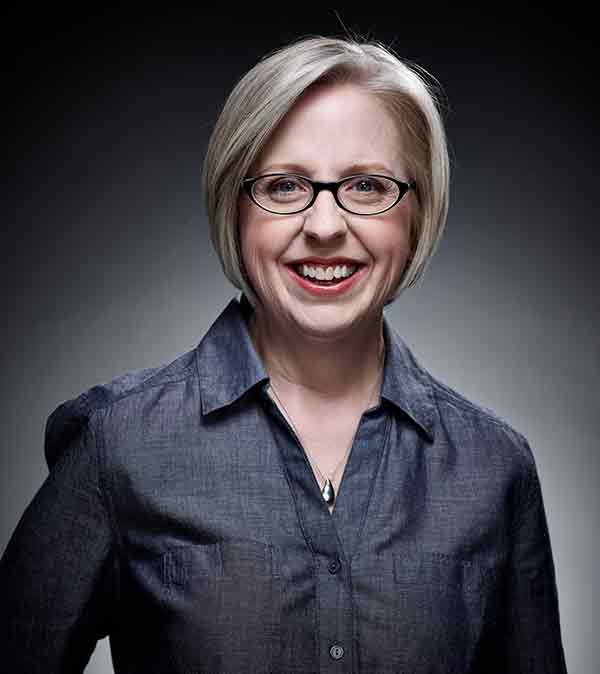
Kimberly R. Mercier
Principal, Lighting Design Innovations
I have spent nearly my entire professional life in lighting. For more than three decades, I’ve worked as a designer, business owner, mentor, volunteer, and standards contributor. I am a Fellow and Past President of the IES. I’ve been the Managing Principal of an independent lighting design firm for 20 years. I’ve mentored more young professionals than anyone juggling a P&L probably should.
In short, lighting has been my professional home.
But, until recently, there was one thing I’d never done: join the US National Committee of the CIE (International Commission on Illumination). In 2024, I didn’t just join: I jumped in as Vice President of Membership.
Why now?
Because the CIE-USNC is faltering. And if it fails, the consequences will reach far beyond one committee. I see a crack that could rapidly widen. There are just a few of us with our fingers in the dike, for the moment.
IES vs CIE: What’s the difference?
Most lighting professionals understand the IES. Few understand how deeply the IES relies on the CIE.
The CIE operates like a “United Nations” of light. Thirty-six national committees (not individuals) participate in developing and approving CIE Technical Reports, International Standards, and Technical Notes. The CIE-USNC represents the United States within that global structure.
Here’s the critical point: the documents published by the CIE are a crucial reference and resource for the standards that the IES develops.
CIE committees develop global consensus on illumination research. The IES then translates that scientific consensus into ANSI/IES standards. Those joint standards underpin energy codes and safety regulations across the US. They shape the documents in the IES Lighting Library Standards Collection. They govern how we specify, manufacture, and apply light.
More than 50% of IES documents reference CIE publications directly. That percentage rises even higher when you account for circular references: i.e., IES documents citing other IES documents that cite the CIE.
To sum up: CIE publications are foundational to the ANSI/IES Standards upon which our AEC professionals rely. Remove US participation from the CIE, and you weaken that foundation.
Without the CIE-USNC, US researchers, manufacturers, and designers lose their formal seat at the global table. CIE standards will continue, but they will reflect the consensus of other nations, not ours.
And our IES technical committees alone cannot replicate the century of research depth, international expertise, and global coordination assembled by CIE. Even if our domestic institutions were fully funded and aligned (which they are not) we could not replace that global body of knowledge and insight. It is different from the century of knowledge we’ve gained as the IES – it is symbiotic.
What’s at risk?
Let me be direct.
- US subject matter experts should be participating in the shaping of global illumination translational science and recommended practices.
- US standards are more robust when they align with international consensus that includes our participation.
- ANSI/IES technical standards are more powerful when the subject matter experts creating them are also contributing to the global consensus of the CIE.
- We risk surrendering a century of US intellectual leadership in illumination standards, science, and the profession of lighting design if we fail to act.
The US once played a dominant role within the CIE. US experts chaired committees. US companies funded research. And therefore, US professionals helped define global best practice. That influence has gradually declined, and now we face the possibility that it will be extinguished.
I have spent the entirety of my career in lighting design and in supporting all the lighting industry channels that undergird my profession. In the United States, the lighting profession rests on three organizations: the CIE-USNC, the IES, and the IALD (with the IALD supporting lighting designers). Like a three-legged stool, industry stability would be compromised without any one of them.
You do not need to share my sense of urgency. But I ask you to consider the implications if I am right.
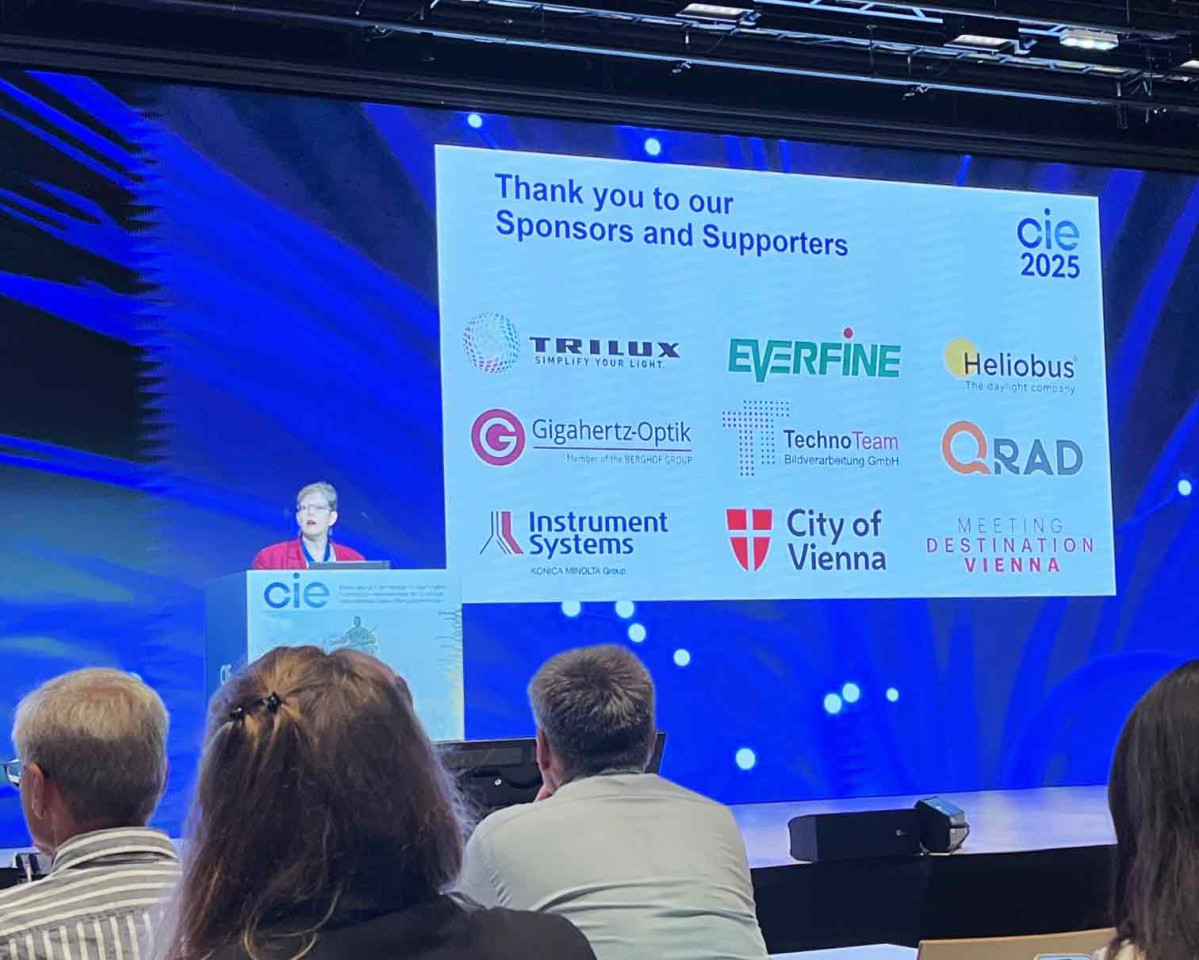
CIE President Jennifer Veitch (Canada) opens the International Commission on Illumination (CIE) Midterm Meeting in Vienna.
Follow the Money
Stabilizing the CIE-USNC requires approximately US$60,000 per year. In the context of the US lighting industry, that number is a relatively low hurdle for something so important. We are all associated with businesses, organizations, and individual professionals that love lighting. Helpers can be found everywhere. So please, share this story!
Our national committee, the CIE-USNC, has the potential to be the most influential member of the CIE. This is our opportunity to increase our recognition and influence on the global stage: for ourselves, our businesses, our researchers, and our work.
CIE follows the money. National-committee member fees are based on economic scale, and the US lighting market represents one of the largest GDP contributors among the member nations. Looking back, the USNC was heavily represented on many CIE technical committees, often as chair. This ability to populate the CIE committees with US experts was thanks to the engagement of US companies and institutions and their support of key research and subject matter experts. They understood the leverage it provided, and the US had opportunities to hold sway in global discussions.
The US also represents the largest market for verified CIE publication sales. This is a significant revenue stream for the CIE and proves our relevance.
If we value that influence and intend to regain that sway, we must fund it. This is not charity. It is infrastructure.
At a time when the AEC marketplace grows more globally interconnected, when digital transformation accelerates, and when energy and sustainability policies evolve rapidly, stepping back from international standards participation would be a strategic mistake.
Opportunity knocks
Despite pandemic-era disruptions and ongoing trade-policy volatility, the US AEC marketplace is more globally entangled and exposed than ever. We should all be racing toward this opportunity to regain our stature with the CIE. Sponsorship and support of the CIE-USNC makes the lighting industry in the United States stronger and more resilient to digital disruptions.
First, we need sponsorships, memberships, and direct contributions from organizations, businesses, and individuals who understand that standards do not create themselves. Nor are they inherently neutral.
When standards drift out of alignment with your practice, your manufacturing realities, or your distribution model, they can create real friction. They can increase costs, constrain innovation, and distort markets. Misaligned standards also shape outcomes. They can produce poor lighting environments, compromise visual comfort, and diminish our quality of life in the built environment.
Standards have power. If the rules impact you, you need a seat at the table where they are written. If, like me, you believe the US should lead in global lighting discourse, this is the moment to act. I am happy to work with you to align CIE-USNC opportunities with your objectives.
2026 IESNYC Event and Educational Sponsors
Brilliant Sponsor

Radiant Sponsors


Glow Sponsors
Sparkle Sponsors
Lutron Electronics | Light Abilities
Twinkle Sponsors
Available Light | Hartranft Lighting Design | HLB Lighting Design
KGM Architectural Lighting | MGE Lighting Design Collaborative | Pierce Lighting Studio
