
The Fabric of our Society
The Fabric of Our Society column invites industry leaders to provide experience-based opinions and discussions on various topics. Diverse perspectives are respected and most welcome, but do not necessarily reflect the opinions of IESNYC or the Board of Managers. Want to contribute? Email [email protected]
November 2025
Designer and Advocate: Navigating Dual Roles
 Edward Bartholomew
Founder and Principal, Bartholomew Lighting
Co-Founder and Executive Director, Light Justice
Founder and Former President, BUILD (Black United In Lighting & Design)
Balancing the dual role of lighting designer and advocate is not simple – but it is fulfilling. As Founder of Bartholomew Lighting and co-founder of Light Justice and founder of BUILD (Black United In Lighting & Design), I live at the intersection of design practice and social advocacy. It might seem like three separate paths: running a lighting design practice, supporting Black professional excellence, and championing equitable lighting. But for me, these are all deeply connected and profoundly necessary, especially in today’s challenging times.
I could have chosen a straightforward route: launching a firm, serving clients, and delivering competent design. However, growing up in South Central Los Angeles, I witnessed firsthand the disparity between communities with access to design and those without it. The neighborhoods that I grew up in did not benefit from, and were not aware of, the impact of design in their built environments.
I wanted to change that. And I knew that I was not alone. Other designers also want to transform the lighting design practice by raising awareness of its social impact and value to us all. Each time I speak at a conference, a webinar, or a design firm, I am encouraged to find my message of equitable lighting design resonating with my colleagues.
A Black-owned lighting design firm
When I launched Bartholomew Lighting, my vision was larger than creating beautiful, award-winning projects. I wanted to design lighting that serves everyone, especially communities historically overlooked by our profession.
As principal of a Black-owned lighting design firm, I am proud to be a certified minority business enterprise (MBE) in Massachusetts. In theory, this designation diversifies the pool of firms invited into state projects. MBE status acknowledges that minority businesses bring unique perspectives and empathy to projects, and that wealth generated through such opportunities can positively impact our communities. It is one step toward correcting the lack of participation among Black- and Brown-owned design firms.
DEIR (diversity, equity, inclusion, and respect) initiatives have successfully supported women-owned firms in the lighting industry, but many other minority groups have not had the same access. My firm’s MBE designation represents only a portion of our project list, but it has opened doors I would not otherwise reach, not because of inexperience, but because of limited connections. At times, partner firms use my status simply to “check the DEIR box” on public contracts without fully engaging our talents. Though frustrating, this is the exception rather than the rule.
Now that DEIR initiatives are being rolled back nationally, the work of building equity is again at risk. Yet my pride in leading a Black-owned firm remains unchanged. I hope it inspires young Black designers to see what is possible when they design with confidence and express their authentic selves.
BUILD: Black United in Lighting & Design
The vision for a Black lighting organization emerged naturally from my desire to create an affinity space offering education, mentoring, networking, and support. At lighting conferences, I could count on one hand the number of Black attendees – and I usually knew them all. I realized many others were absent from these gatherings or needed the support of an affirming professional network.
Thus, BUILD was born. I invited colleagues to meet monthly, and it quickly became a nurturing space where Black professionals could gather, share, and thrive.
My family vacations on Martha’s Vineyard each August deepened this vision. There, Black families have long gathered to enjoy cultural festivals, community, and joy. That sense of belonging – whether on “Inkwell” Beach or strolling Circuit Avenue – is rare elsewhere, and definitely rejuvenating. BUILD aims to bring that same sense of affirmation into the lighting community.
I am proud to have passed leadership to Quincy Drane, BUILD’s Executive Director, and his board, who continue to invite new members and grow this vision monthly.
The origins of Light Justice
The murder of George Floyd in 2020 shook me deeply. I felt anger, grief, and the sense that my design practice was too small in the face of systemic oppression. I questioned the role that lighting design plays in propping up an exclusive, privileged system. Too many celebrated projects seemed accessible only to elite clients, while everyday communities were left behind.
Light Justice emerged from long COVID walks and conversations with my wife, as well as my lighting and education colleague, Mark Loeffler, who mentored me and my newly formed business. After Mark and I presented on Light Justice at LightFair in 2021, Lya Osborn (UnoLai Design International) joined us to co-lead the work. Light Justice has become a platform to reimagine lighting as a tool for justice, healing, and community well-being.
We examined how public outdoor lighting disproportionately surveils minority neighborhoods, and how interior “back-of-house” spaces, where staff and vulnerable occupants work, are too often left with poor, inequitable lighting. This imbalance is not only uninspiring but also unsustainable and inhumane.
The mission of Light Justice is to ensure equitable access to quality lighting and beneficial darkness for historically marginalized communities. It recognizes that light holds power and that darkness, when designed with care, can foster safety, dignity, and balance. By engaging with residents as “citizen designers,” Light Justice promotes collaborative design that empowers rather than oppresses.
Through lightjustice.org, the movement has become a resource hub, connecting designers, policymakers, educators, manufacturers, and community members in pursuit of lighting solutions that are inclusive, affirming, and socially responsible.
Light justice in practice
Balancing advocacy with running a business is a constant negotiation. Not every client embraces Light Justice principles, and not every project fits the mold. To sustain our firm, we balance community-centered initiatives with more traditional projects.
Yet the community projects often shape us most profoundly. They push us to
1. listen differently
2. design with inclusive intention
3. engage more deeply
These practices influence the clients we attract and the values we bring to all our work. In this way, Light Justice is not a side initiative – it lives in every aspect of our practice.
In Roxbury, MA, we reimagined the lighting for Nubian Square in collaboration with the community, enhancing safety while honoring the area's history and culture. In the Bronx, we are supporting a housing community “Story Walk” of self-illuminated sculptures. At the Lewis D. Brown Peace Institute, we are implementing trauma-informed design principles to create healing, restorative spaces.
Even in a hospital project, we reenvisioned some previously overlooked staff support areas. Improving light quality in these spaces is more than a design choice. It’s an act of care that improves the well-being of staff through well-designed lighting.
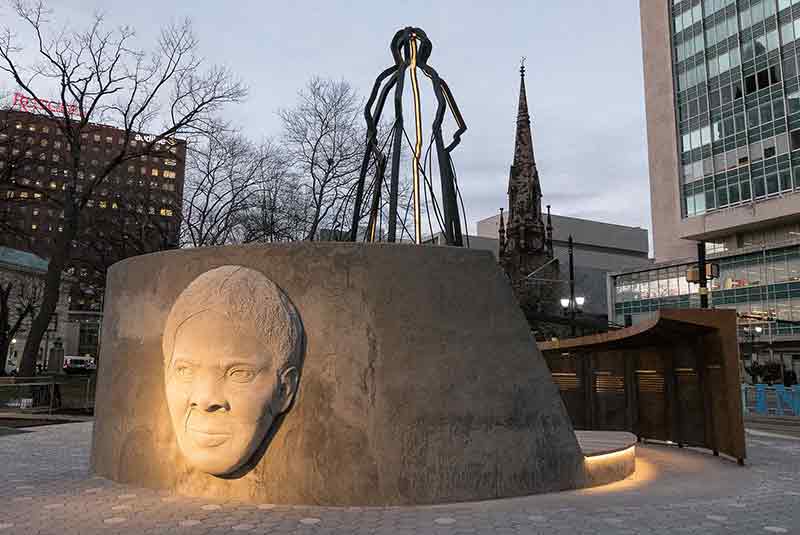
I am especially proud of a project that won a 2025 IES Award of Merit: Shadow of a Face is a newly installed monument to Harriet Tubman in Newark, NJ. It honors her extraordinary life and pays homage to the city’s role in facilitating the Underground Railroad. The monument, designed by artist and architect Nina Cooke John, was a genuinely collaborative lighting design effort that has had a significant and lasting impact on the community.
Throughout these projects, I’ve incorporated light justice, transforming lighting from a utilitarian or aesthetic tool into an instrument of equity. Light justice challenges defaults that often fail under-resourced communities and ignore critical occupants. Ultimately, Light Justice has made me a better designer. It has broadened my perspective, deepened my practice, and proven that advocacy through design is powerful.
Light Justice NOW Awards
The newly minted Light Justice NOW Awards sprouted from a proposed IES Illumination Awards judging category, “Community Impact,” that we shared with IES sections nationwide. (Kudos to the Boston Section for embracing this change.) When Randy Reid of designing lighting magazine proposed launching the Light Justice NOW Awards to highlight equitable projects globally, our goal was clear: to celebrate projects that not only look good but also do good.
Too often, awards spotlight projects with prestige clients, big budgets, and glamorous sites. But what about the lighting that transforms overlooked neighborhoods, projects that restore dignity, provide inspiration, and create safety? That is the work we seek to honor.
The inaugural awards, presented at LightFair 2025, affirmed this vision. Structured around Project and Initiative categories, submissions asked not only what was built, but how, with whom, and for whose benefit. We sought narratives, including renderings and stories of engagement, co-education, and empowerment.
The judging criteria reflected Light Justice’s core values: engage, co-educate, empower, and deploy. By centering real people rather than theoretical users, the award winners demonstrate that lighting can be both technically rigorous and socially transformative. We are proud to promote the winning designers and projects.
These awards are more than trophies – they are statements. They challenge our industry to shift priorities and ask: Who are we designing for? Who do we serve? And who is being ignored? The Light Justice NOW Awards aim to change that, one project and one story at a time.
A call for advocates
Light Justice welcomes all in the lighting industry – but especially in NYC! (Shoutout to Light Justice NOW winners Leni Schwendinger and Chris Bocchiaro for their Urban Braids project in Brooklyn.) Come, join us in making lighting more just and equitable. Are you passionate about fair access to light? Do you want to illuminate spaces where it is needed most? Then we need you.
We are growing, and seeking advocates to contribute their skills, voices, and support. Whether through community engagement, internal initiatives, or financial backing, there is a place for you to shine.
This work is impactful, worthwhile, and inspiring. Together, we can ensure that lighting serves not just the privileged few but every community that deserves to be seen, celebrated, and supported.
Harriet Tubman Monument
Shadow of a Face - Harriet Tubman Monument in Newark
Designer/Artist Nina Cooke John; Lighting Designer Bartholomew Lighting
Photographer Cesar Melgar.
IALD San Diego 2025
Bartholomew, and other Light Justice activists, present widely, from lighting industry conferences to an AIA-accredited presentation for design firms.
Image courtesy IALD Enlighten Americas 2024.

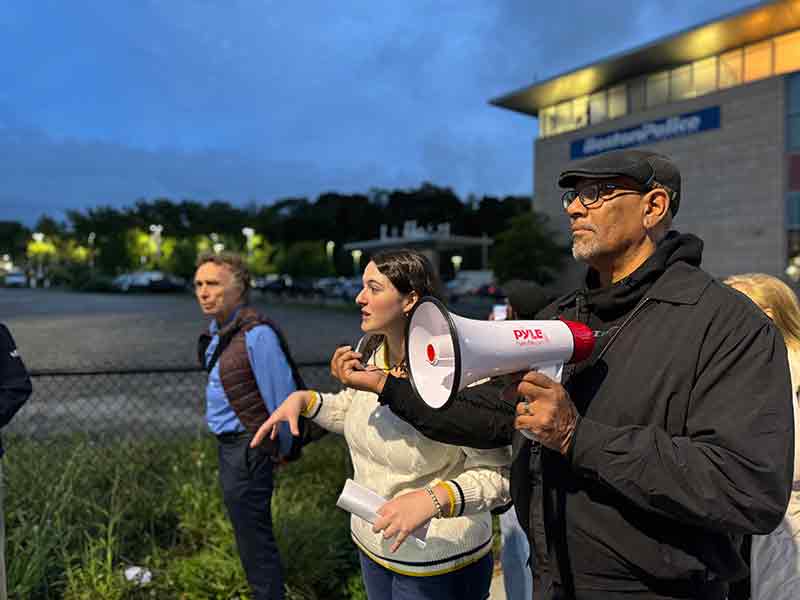
Night Walk-Nubian Square
Light Justice hosted a Night Walk through Nubian Square in Boston, highlighting both inequity and light justice design by Bartholomew Lighting.
Photo courtesy Light Justice.
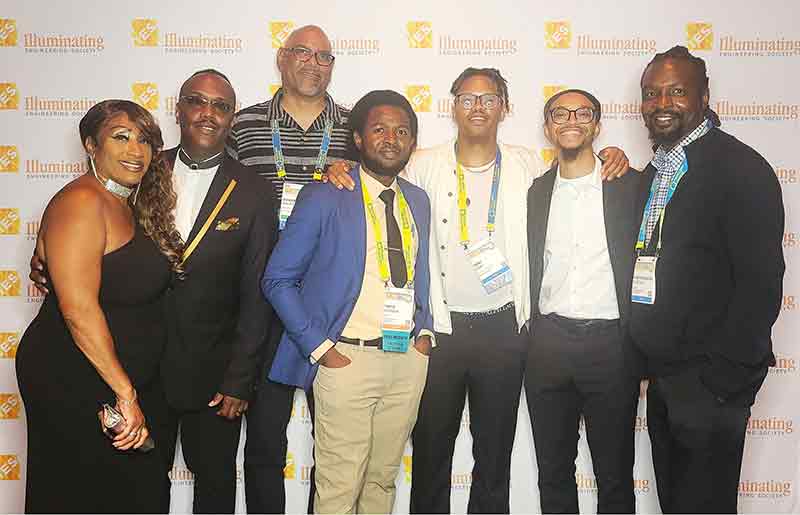
BUILD IES 2025
BUILD creates safe affinity spaces, both in-person and online, for Black lighting professionals from all facets of the lighting industry.
2026 IESNYC Event and Educational Sponsors
Brilliant Sponsor

Radiant Sponsors


Glow Sponsors
Sparkle Sponsors
Lutron Electronics | Light Abilities
Twinkle Sponsors
Available Light | Hartranft Lighting Design | HLB Lighting Design
KGM Architectural Lighting | MGE Lighting Design Collaborative | Pierce Lighting Studio
