
Meet Our Member
The IESNYC spotlights a member each month whose volunteerism, perspective or personal story helps advance our goals, piques our curiosity, and makes the IESNYC become a more vibrant and diverse lighting community. We value their expertise and thank them for volunteering their time and energy for the betterment of the section and NYC Lighting Community. #the_iesnycmom
February 2026
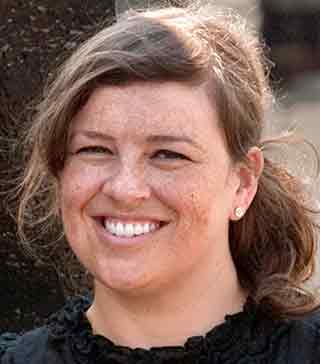 Margo Wiltshire
Associate Principal
Fisher Marantz Stone
Q: How did you first get started in the lighting industry?
I decided at a very young age that I’d be an architect, but at the time, I didn’t really know what that meant. I didn’t see the day-to-day work of an architect until the sixth grade, when I was introduced to one (who became my first employer!). But by then I could have put together a full portfolio of design projects, as I regularly spent my playtime drawing plans and elevations, and building “houses” with blocks and other materials.
When my high school classmates were debating where to go to college and what to study, I already had my game plan. I’d study architecture, earn a degree, and gain experience along the way with cooperative education stints on both the East and West Coasts. And that’s what I did.
Six years in, during my last internship in NYC, my roommate was working for Fisher Marantz Stone, and he suggested I consider exploring lighting design as a specialization. I had developed many theoretical ideas about light in my studio projects and thesis, but I didn’t know anything about lighting as a profession. I didn’t even realize that FMS had collaborated with some of the architecture firms I had been working for. I figured that as an architect I could design any and all aspects of a project, so I didn’t need to change my path.
But my dear friend persisted, and one day suggested I join him at an event where one of the founders of FMS was giving a talk. (It may have been IESNYC-sponsored?) Paul Marantz introduced me to his world: a world where he collaborated with the architects I had studied and admired in school, and contributed significantly to the success of their projects. I realized that Paul and his partners didn’t need to commit to a single building typology, architectural style, or brand. In focusing on light, they (and therefore, I) had the option to choose what was becoming, to me, the most interesting facet of the built environment.
I finished up school, did some traveling, and made plans to move to New York after graduation. Instead of asking one of my former employers for a full-time position, I decided I’d give lighting design a try. I landed an interview with Charles Stone, flew to NYC, and received an offer that I happily accepted. I thought of it like another internship, to sample until I was ready to move on. But here, more than 27 years later, I’ve continued to expand my experiences and responsibilities, eventually becoming a principal and partner in the firm.
One more note about that first architect to hire me as a kid so many years ago: The earliest design task I recall being given was to draw up a lighting plan for a small retail space. My approach then surely wasn’t going to win any Lumen Awards, but perhaps an aptitude was sensed!
Q: How did you first get involved in the IESNYC?
With an architect’s education, I knew a few technical basics about light, taught in “Environmental Technologies” courses in school. But those classes focused on developing cursory understanding to facilitate conversations with MEP engineers in professional life. I lugged those big textbooks to NYC, but they didn’t frame the information through the lens of the industry I was joining. A colleague at FMS told me about the Fundamentals of Lighting course offered by the IESNYC, and I signed up right away. I don’t have a record of exact dates, but I wouldn’t be surprised if I joined prior to receiving my first paycheck. From day one, I not only learned more about our medium, but also came to know the now-familiar faces of the IESNYC Section, giving their time to teach the next generation. I’ve been a member ever since.
Q: How do you see your role as a member of the IESNYC?
Let’s say I’m a steady but quiet presence. I attend as many of the events (especially education-focused seminars and tours) as my calendar allows. And I strongly encourage new designers in our office to become members and take advantage of all the learning opportunities as well. I volunteer a bit: I judged the national IES Howard Brandston Student Lighting Design Education Grant competition for several years, and more recently, I joined the IESNYC Scholarship Committee. So I suppose education is a theme, but behind-the-scenes.
Q: In your opinion, what are the best assets of the IESNYC?
The tradition and legacy of the IESNYC are unrivaled. It’s not only a community for designers and practices, but also an incubator for our industry as a whole. Members of the IESNYC impact the world of lighting far beyond our great city, raising global standards every day… and we have for generations!
2026 IESNYC Event and Educational Sponsors
Brilliant Sponsor

Radiant Sponsors


Glow Sponsors
Sparkle Sponsors
Lutron Electronics | Light Abilities
Twinkle Sponsors
Available Light | Hartranft Lighting Design | HLB Lighting Design
KGM Architectural Lighting | MGE Lighting Design Collaborative | Pierce Lighting Studio
